Mercedes
The Life ListMercedes is one of the women living at Joshua House, where the circumstances behind her homelessness give a concrete face to the financial insecurity the shelter addresses. A single mother who lost her home after an adjustable mortgage became unaffordable, she now has a place to stay with her children. The novel also shows her participating in the shelter’s everyday community: helping prepare a Thanksgiving meal, looking out for its director, and sharing stories beside Sanquita Bell after childbirth.
Identity and Circumstances
The account of Mercedes’s housing crisis comes through Brett Bohlinger, who describes her as a single mother drawn into an adjustable-rate mortgage. When the interest rate rose sharply, Mercedes could neither afford to keep the house nor sell it; she had to walk away. Someone then told her about Joshua House, which provided shelter for her and her children. The sequence links her present circumstances to a specific financial trap rather than presenting homelessness as a defining personal trait.
Brett characterizes Mercedes and most of the women at the shelter as ordinary people who have fallen on hard times. That description corrects the easy assumption that a shelter’s residents can be reduced to their need for help. Mercedes’s story makes the pressures behind that need legible: a mortgage whose payments changed, a house she could not sell, and children whose housing depended on finding another place to go.
Life at Joshua House
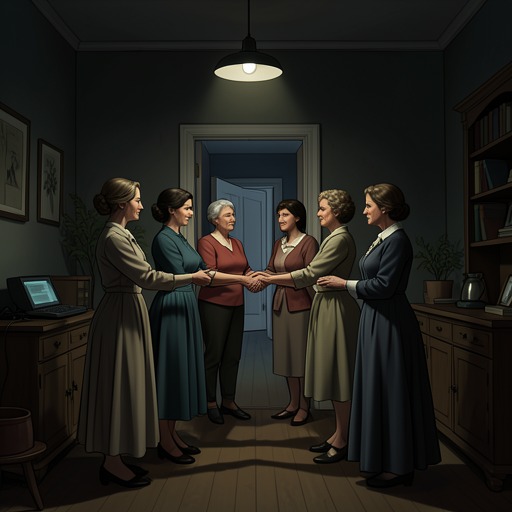
During the Thanksgiving meal Brett brings to Joshua House, Mercedes joins the other women in unloading the food and gathering it on the kitchen counter. She is among a group that turns a delivery into a communal meal: some residents arrange the food while others gather around it. Mercedes is not shown as a passive recipient of Brett’s generosity; she takes part in the work of making the dinner available to the household.
The holiday also brings Jean Anderson’s family into the conversation. Mercedes points out that Jean’s daughter and grandchildren are visiting, a reminder that Jean has family at home even as she comes to work at the shelter. When Jean reacts sharply to Brett’s presence, Mercedes tells her to go home and assures her that the women will be fine. The gesture is both practical and considerate: Mercedes recognizes Jean’s competing obligation and speaks on behalf of the women who can manage without her that day.
Relationships and Shared Care
Mercedes appears among the women who form Joshua House’s everyday network of mutual assistance. At Thanksgiving, the residents contribute to the meal and respond to one another’s needs; Mercedes’s reassurance to Jean belongs to that same pattern of care. The episode gives her a small but active role in the shelter community, one expressed through attention to another person rather than through a separate account of her own hardship.
Later, Mercedes and Tanya are at Sanquita Bell’s bedside, telling stories about their own labor as Sanquita recovers after childbirth. Their presence places Mercedes within a circle of women able to offer companionship through shared experience. The scene does not elaborate on the details of her own labor or family life, but it shows her taking part in an informal exchange that keeps Sanquita company and connects her recovery to other mothers’ experiences.
Narrative Significance
Mercedes’s story helps the novel present homelessness as a consequence of precarious housing as well as a condition met through communal support. Her lost house is tied to the escalating cost of an adjustable mortgage and the inability to sell; Joshua House, in turn, offers her children a place to stay. Her circumstances are conveyed briefly, but the specificity of the mortgage crisis resists treating hardship as an unexplained personal failure.
Her appearances also broaden Brett’s understanding of the shelter beyond the role of a place where she visits a student. Mercedes helps with a holiday meal, considers Jean’s family obligations, and joins other residents in supporting Sanquita. These actions make the shelter visible as a community with relationships and contributions among its residents, not merely a setting for Brett’s charitable gestures. The novel does not follow Mercedes beyond these episodes, so her longer-term circumstances remain unstated; what it does show is a mother navigating housing loss while participating in the care that sustains life at Joshua House.